Last Updated on August 29, 2026 by Mihir Mohan Madhu
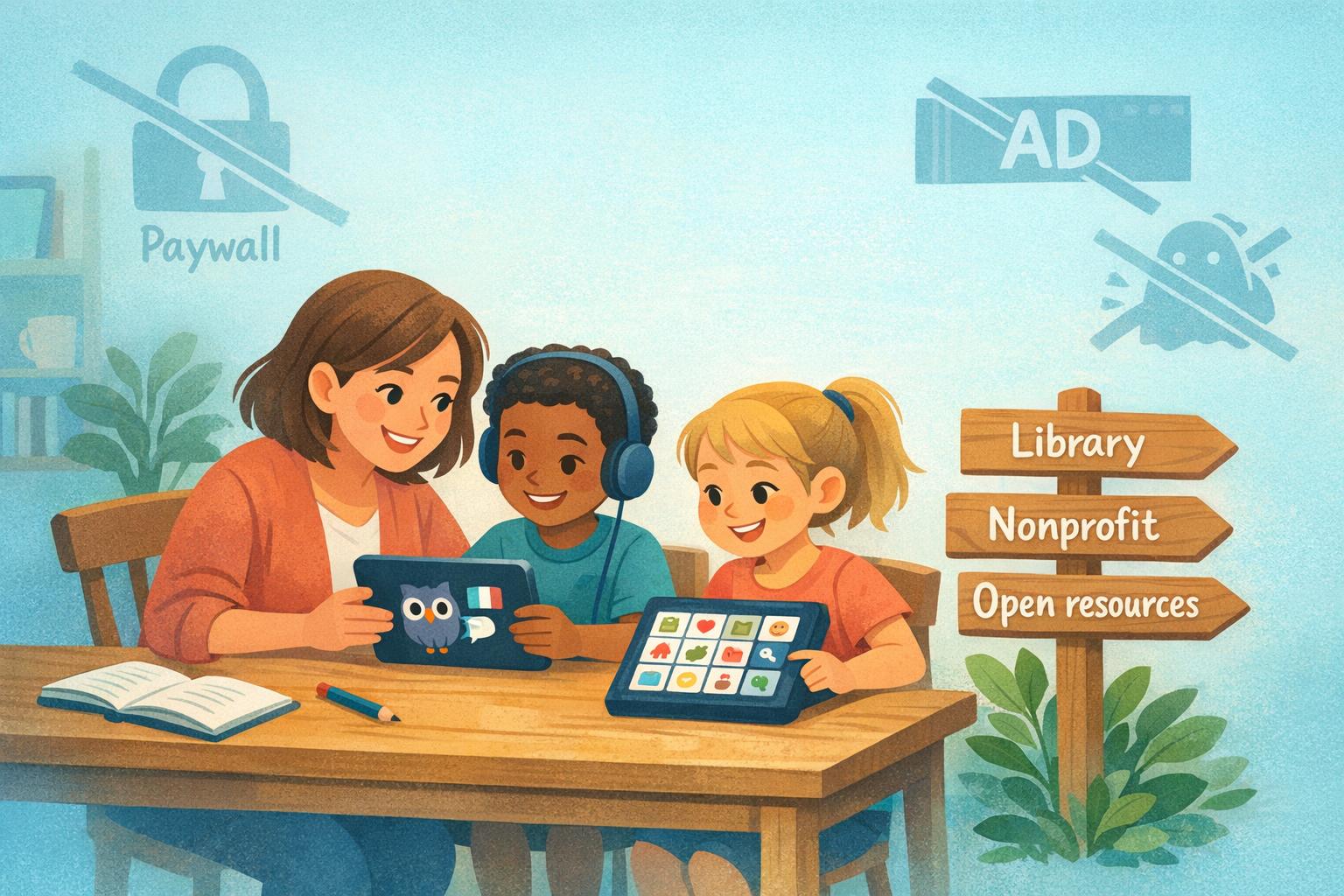
Yes, there are language apps you can use completely free, but most “big name” apps are not truly free forever in the way parents and professionals usually mean it. They might be free to download, free for a limited number of lessons, or free with ads. If your goal is a 100 percent free language learning app with no paywalls, no trials that expire, and no features locked behind a subscription, you will want to look for nonprofit or open-license options, plus free library-based programs. There may also be options available through your child’s school. In this post, I will walk you through what “completely free” really means, which options are genuinely free, and how to choose a safe, realistic option for kids, including kids with autism and AAC users.
Quick clarity before you download anything.
A “completely free language app” usually falls into one of three buckets. It is nonprofit and donation-funded. It is open-source or publicly funded. Or it is free through your public library or school account, which feels free to you, even though the institution pays. If an app is funded by ads or data collection, it can look free, but the cost can show up in privacy tradeoffs, especially for children.
What do people mean when they ask, “Is there a completely free language app.”
When I hear this question from parents, I usually hear two needs underneath it. The first is financial. Therapy, devices, sensory supports, and daily life add up quickly. The second is emotional safety. Nobody wants to download an app for a child, get them excited, and then hit a paywall that stops progress or triggers frustration.
For speech-language pathologists, the question often has a third layer. You might be looking for something you can ethically recommend without worrying about families being pressured into upgrades. You might also be thinking about privacy and data collection, especially if the app is used in a school or clinical setting.
So let’s define “completely free” in a practical way.
A realistic definition of “completely free.”
Most people mean all of the points below.
- Free to download.
- Free to use long-term, not just a free trial.
- No locked lessons that stop progress.
- No “best features” hidden behind a subscription.
- No pressure tactics like countdown timers or constant upgrade prompts.
- Acceptable privacy practices for children.
That last bullet matters more than many families realize. Many apps are free because the company earns money in other ways. Some use ads. Some collect data for analytics. Some are fine for adults, but not ideal for kids.
Are the popular language apps actually free.
Some well-known apps have free versions, but they are usually “freemium.” That means you can learn with them without paying, but you will hit limitations. For many learners, that is okay. For many kids, especially kids who thrive on predictable routines, the constant interruptions can become a barrier.
Instead of naming every popular app and debating the fine print, I want to give you a decision framework you can use in two minutes.
The two-minute test to see if an app is truly free.
Before you commit, open the app store description and the app’s website. Look for these signals.
- Does it say “in-app purchases.” If yes, it is not completely free.
- Does it mention a free trial. If yes, you will likely hit a paywall.
- Does it rely on ads. If yes, it might be free, but not always kid-friendly.
- Is there a nonprofit or public education sponsor. If yes, it is more likely to be truly free.
- Can you find a clear privacy policy. If no, I would pause.
That privacy policy point is not just “nice to have” when children are involved. Children’s apps often fall under stricter expectations, and app marketplaces can impose extra rules for kid-directed products. Apple’s Kids Category, for example, is known for being more restrictive about transmitting personally identifiable information to third parties, even in parent-facing sections . Google Play’s Families policies also place limits around data collection and certain identifiers .
So what is the best answer to, “Is there a completely free language app.”
The best answer is this. Yes, but you usually need to look beyond the most heavily advertised apps. Truly free language learning tends to come from publicly funded, nonprofit, or open-license options. Another strong “free” route is using your public library, because many libraries provide language learning access at no cost to families.
Here are the most reliable categories to search, plus what to expect from each one.
Option 1. Library-based language learning programs that feel free.
If you want the easiest path for families, start with the library. Many public libraries offer free access to language platforms through your library card. This is often the most “parent-friendly” option because it tends to have fewer ads and a more stable user experience.
What I like about the library route for families affected by autism is predictability. It is one login. It is usually consistent. And if a child needs a routine that does not suddenly change because a company updated their pricing model, library access is often more stable. And you do not even need to physically visit your local library branch to gain access… Most library systems have an online portal that will allow you to access everything normally available to library visitors.
Option 2. Nonprofit and publicly funded learning resources that are genuinely free.
Nonprofit language resources can be a great match when “completely free” is non-negotiable. These are often funded by grants, donations, or public institutions. The upside is fewer paywalls. The downside is that the design may be less flashy than commercial apps. That is not always a bad thing for kids who get overwhelmed by visual clutter.
Option 3. Open educational resources and YouTube-based language instruction.
This category is absolutely free, but it is less “app-like.” It can work beautifully for motivated teens and adults. For younger children, or for learners who benefit from interactivity, it often needs adult support and structure.
If you go this route, consider creating a simple weekly routine. For example, you can pick one topic per week, like greetings or foods, and repeat it across short videos, songs, and practice in real life.
What if you are asking because your child is a gestalt language processor, minimally speaking, or uses AAC.
This is where I want to slow down and be very honest. Most “language learning apps” are designed for people who already have a strong first language and want to learn a second one. Or they are designed to piggyback on the language skills a child many be learning at school- Grammar, vocabulary, comprehension, etc. They are not designed to build functional communication in the way an AAC system or language therapy does.
If your child has a disability impacting their communication skills and you are hoping an app will “teach language,” it can still be helpful, but you will get better results if you treat it as a support, not the engine.
Thoughts on AAC Apps.
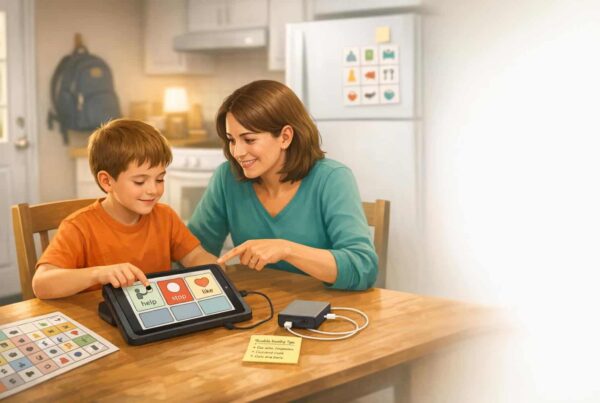
For AAC users, personalization and daily-life relevance matter even more than the app itself. In AAC practice, one of the fastest ways to increase engagement is to personalize vocabulary around the person’s real life, interests, and routines. That same principle applies here. If a child loves trains, practice “go,” “stop,” “again,” and “fast” in the context of trains, not generic flashcards.
How to choose a free language app that is safe for kids.
Free is only helpful if it is also safe and usable. When children are involved, privacy and advertising matter.
A kid-safety checklist for any free app.
Use this checklist before you hand over the device.
- Look for a clear privacy policy. If it is hard to find, consider that a red flag.
- Avoid apps with heavy ad exposure. Ads can be dysregulating and unpredictable for many children.
- Check if the app is listed for kids or families. Platforms often require stricter guardrails there.
- Use guided access or parental controls. This reduces accidental clicks and unexpected exits.
- Watch for links that lead out of the app. Kid-focused policies often require parental gates for outbound links.
If you are an SLP using a tool in therapy, ethical expectations around confidentiality and secure technology use can also come into play. ASHA emphasizes competent service delivery and maintaining confidentiality, including when technology is used . That does not mean you cannot use free tools. It means you should be thoughtful about what data is being collected and whether the tool is appropriate for the setting.
A simple weekly plan that reduces stress and increases learning.
Even the best free app is just a tool. The outcomes come from how you use it. If you are a parent, you do not need to become a language teacher. You just need a consistent, low-pressure plan.
Here is a structure that tends to work well for many families, including families supporting autism.
- Pick one tiny theme per week. Examples include greetings, snacks, animals, or feelings.
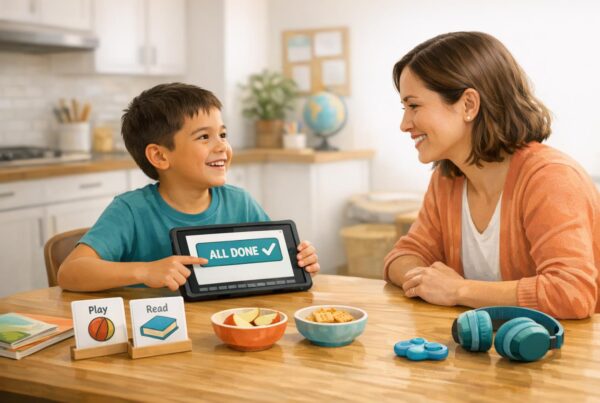
- Choose five core words. Examples include “go,” “stop,” “more,” “help,” and “all done.”
- Practice in real routines. Use the words at snack time, bath time, or when leaving the house.
- Model with no pressure. Best practice involves modeling without forcing a response keeps communication safe and inviting .
- Celebrate any attempt. One word counts. A gesture counts. A button press counts.
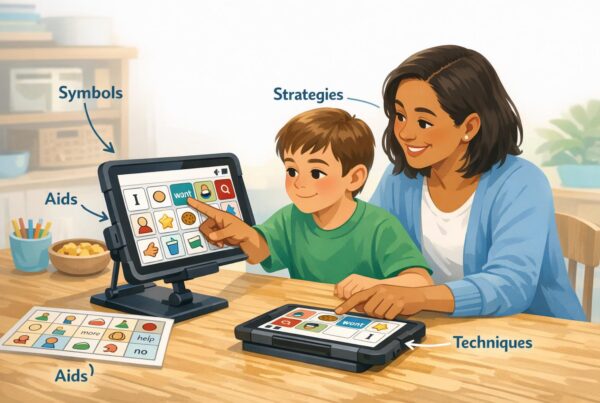
If you are incorporating AAC, you can also add those five words to the child’s AAC system. Many teams find that when vocabulary is embedded into real life and modeled often, communication use becomes more consistent .
What to do if your child gets stuck on one repetitive phrase in the app.
Repetition is not always a problem. It can be regulation, practice, or joy. If the repetition is interfering with learning or causing frustration, try these supports.
- Shorten the session to five minutes, then stop while it is still going well.
- Switch from the app to a real-life activity using the same words.
- Offer a choice between two practice activities, like a song or a snack routine.
- Personalize the content. Personal relevance increases engagement .
The honest tradeoffs. “Completely free” often means fewer bells and whistles.
This part is important. Many completely free tools are not as polished as paid ones. That does not mean they are worse. It means you may need to supply the structure yourself. For many families, that is a fair trade for zero cost and fewer manipulative upgrade prompts.
If you try a truly free option and it feels too bare, you have two “middle paths.” You can use a free library program, which often feels more premium. Or you can use a freemium app intentionally, with a plan for how you will handle limits and ads.
Recommended next step if you want a free language app right now.
If you want the fastest way to get a trustworthy “free” language learning experience today, do this.
- Check your public library website and search “language learning” in their digital resources.
- If you are an SLP, ask your school district or clinic what they already provide for staff and families.
- Only if those come up empty, test a freemium app and use the two-minute test above to avoid surprise paywalls.
This approach saves time and reduces the chance that your child gets attached to something that suddenly becomes inaccessible.
FAQs about completely free language apps.
Is Duolingo completely free.
Duolingo has a free version, but it is not usually considered “completely free” because it includes ads and paid upgrades, and some features are restricted. If you are okay with ads and limits, it can still be a workable free option. If you need truly free with no tradeoffs, look to nonprofit, open-license, or library-based options instead.
What is the safest completely free language app for kids.
The safest starting point is often a program provided by a public library or school because it tends to have stronger guardrails and fewer advertising pressures. For any app, review privacy practices and consider how links, ads, and data sharing are handled for child audiences .
Can a language app help my autistic child start talking.
A language learning app is not a substitute for speech-language therapy, and it is not designed to build early functional communication from the ground up. It can still support exposure, vocabulary, and connection, especially when paired with modeling in real routines. If your child uses AAC, prioritize consistent modeling, personalization, and low-pressure opportunities, since these are known to support communication growth .
Are free apps a privacy risk for children.
They can be, depending on how the app is funded. Some free apps rely on ads or data collection. App marketplaces have additional restrictions for kid-directed apps, including limits related to transmitting personal information to third parties and requirements for parental gates in some contexts . Always check the privacy policy and settings before use.
If I am an SLP, can I recommend a free app to families.
Yes, you can recommend free tools, but it is wise to consider whether the app collects personal data, whether it is appropriate for children, and how it aligns with confidentiality expectations when technology is used in service delivery . When in doubt, lean toward library-based programs or tools with clear, child-appropriate privacy disclosures.
Conclusion. Yes, there are completely free language apps, but the best free option is often not in the app store top charts.
If you came here hoping for a single magic name, I get it. Most families are juggling enough already. The most dependable path to “completely free” is typically nonprofit and open-license learning resources, plus library-based access that gives you a premium experience at no cost.