Last Updated on August 29, 2026 by Mihir Mohan Madhu
Yes, free speech therapy can be available, but it depends on your child’s age, where you live, and what systems you qualify for. In the United States, the most reliable “no cost” options are usually early intervention services for babies and toddlers, speech therapy through public schools for preschool and school-age children, and certain insurance pathways like Medicaid. You can also sometimes find low cost services through university training clinics and nonprofit programs. This post will walk you through where free speech therapy is most commonly found, how to ask for it, and what to do if you keep hearing “there’s a waitlist.”
Quick clarity. “Free” usually means no cost to the family at the point of service. Some programs are truly free, and some are “covered,” which can still feel free if your copay is zero. Your best first step is to identify the right entry point based on age, since that determines the system responsible for providing services.
Is there free speech therapy for kids with autism?
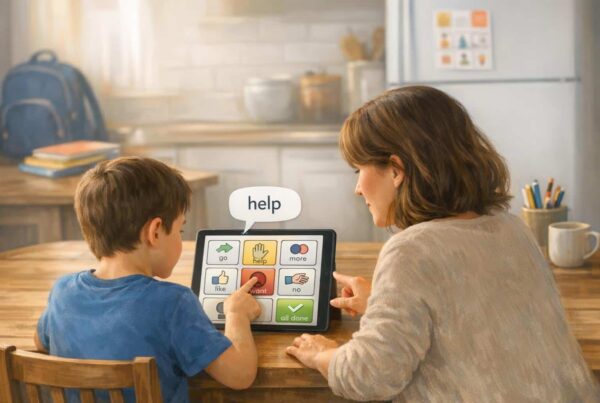
Often, yes. Many autistic children access speech language services at no cost through public systems, especially early intervention programs and public schools. If your child uses AAC, or might benefit from AAC, that support can also be part of therapy and education planning. AAC is not a last resort. It is a language access tool that can reduce frustration and expand communication opportunities at home, in school, and in the community .
If you are a parent reading this, I want you to hear this clearly. Needing help accessing therapy is not a personal failure. Systems are complicated, and waitlists are real. If you are an SLP reading this, you already know how many families are juggling paperwork, behavior, sleep, school calls, and medical appointments. The goal here is to make the “Where do I even start?” question feel simpler and more doable.
Where can I get free speech therapy near me?
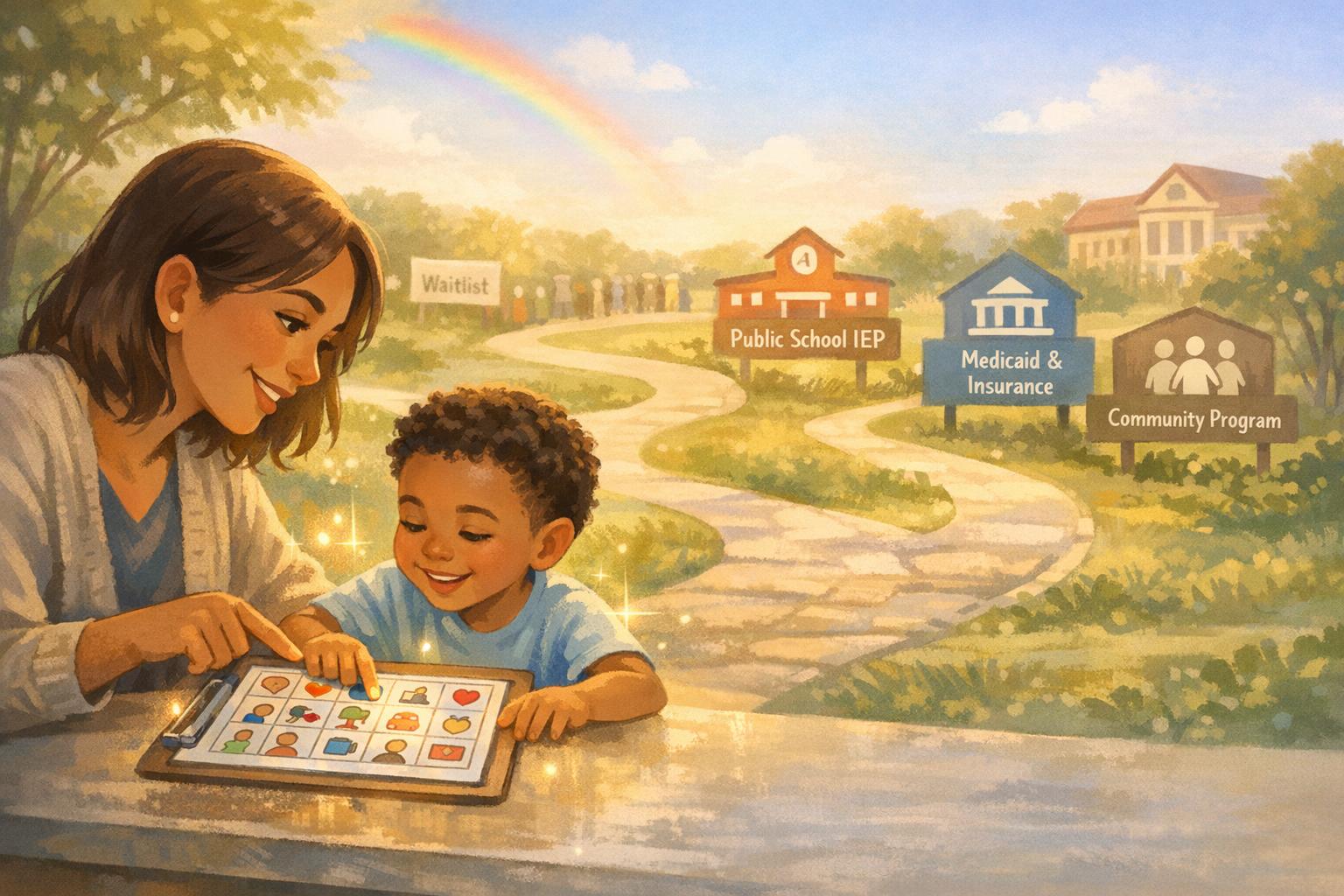
You typically find free or no cost speech therapy in five main places. The right option depends mostly on your child’s age and school enrollment status.
- Early intervention programs for ages birth to three.
- Public school services for ages three to twenty one, if the child qualifies for special education supports.
- Medicaid funded therapy, depending on state rules and medical necessity requirements.
- University speech and hearing clinics, which are often low cost and sometimes free through research studies.
- Nonprofits and community programs, which vary widely by location.
In the next sections, I will break down how each pathway works, what to ask for, and how to avoid common delays.
Can my child get free speech therapy through early intervention (birth to 3)?
If your child is under three, early intervention is usually the most direct path to speech language services with little to no cost. These programs are designed to support developmental needs as early as possible, which matters because early communication support can change the daily experience of a child and family. If your child is not speaking yet, or has limited speech, early support can also include AAC strategies that help them communicate right away, instead of waiting for speech to “appear.”
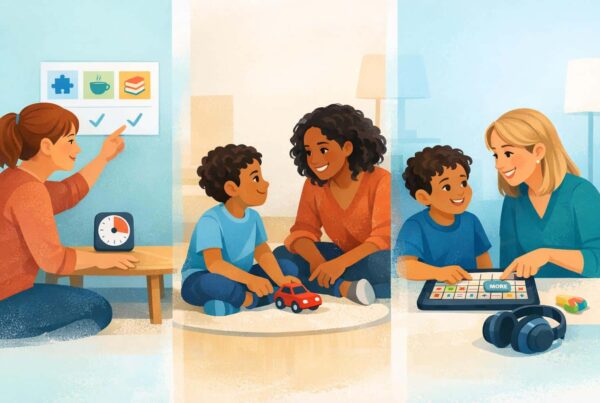
AAC can include picture boards, sign, communication books, or speech generating devices. AAC can also support participation in early literacy routines, like shared book reading, by helping a child answer questions, comment, and build vocabulary in a way that spoken only instruction often does not allow .
How do I request early intervention speech therapy?
Use a simple, written request and keep it friendly and direct. You do not need perfect wording. You need a paper trail.
- Search for your county or state early intervention program and request an evaluation.
- In your request, list your concerns in everyday language, like “not using words,” “not understanding simple directions,” or “frequent frustration because they cannot communicate.”
- Ask what documents you need, and ask how long scheduling usually takes.
- After the evaluation, ask for the results in writing and ask what services are recommended.
- If eligible, ask how often sessions will occur and whether parent coaching is included.
Often, a child may be scheduled relatively soon for an evaluation, but then parents are informed there is a waitlist to actually begin therapy. If you run into a waitlist, ask what supports you can start at home now. If AAC is being considered, you can ask the team to start with low tech AAC immediately. Consistent access matters more than “the perfect device.” You can model one or two words naturally during routines, without turning communication into a test .
Is speech therapy free through public school (ages 3 to 21)?
For many children, yes. Public schools can provide speech language pathology services at no cost to families when a child qualifies for special education supports. In practice, that means speech therapy is typically delivered under an IEP (Individualized Education Plan) or sometimes a 504 plan, depending on the situation and the district. If your child qualifies, school based services can be a powerful “free speech therapy” route, especially when private therapy is too expensive or challenging to schedule.
School services can include speech sound support, language development, social communication goals, and AAC. AAC use can support participation, inclusion, and academic access, including reading and writing tasks. When AAC is integrated into classroom routines, students can show comprehension, build vocabulary, and participate in literacy instruction more fully .
What if my child is in private school or homeschooled?
This depends on your state and district policies, but many areas have a “child find” obligation to evaluate and identify children with disabilities, even if they are not enrolled in public school. The availability of direct therapy services for private school or homeschooled students varies, but an evaluation is often still possible. If you are unsure, call your local public school district and ask for the special education department or Child Find Office.
What should I say when I request a school speech evaluation?
Here is a parent friendly script you can copy into an email.
Sample email. “I am requesting a full speech and language evaluation for my child due to concerns with communication. I am concerned about expressive language, receptive language, and social communication. Please share the next steps and timelines for evaluation and eligibility.”
If AAC is on your radar, add one sentence. “I would like the team to consider AAC supports as part of the evaluation process.” AAC does not prevent speech. It supports communication access. Many AAC best practices focus on natural modeling, personalization, and embedding communication into daily routines so the child can use language all day, not just during therapy .
Can Medicaid cover speech therapy so it feels free?
In many states, yes. If your child has Medicaid, speech therapy is often a covered benefit when it is medically necessary and provided by qualified providers. Families sometimes pay nothing out of pocket. Coverage and authorization rules vary by state, and there may be limits on visit counts or documentation requirements.
If you are an SLP, you already know that “medically necessary” documentation can be the barrier. If you are a parent, you do not need to master insurance language. You can ask the clinic to verify benefits and explain requirements in plain terms.
If you are stuck, ask these questions.
- Is a referral required from my pediatrician?
- Is a formal diagnosis required?
- Do you bill Medicaid directly, and is there a copay?
- Do you need prior authorization?
- What documents do you need from me?
Can university clinics provide low cost or free speech therapy?
Often, yes. university speech language pathology programs commonly operate training clinics where graduate clinicians provide services under supervision. This can reduce costs significantly. Some clinics also run research studies that include free evaluations or therapy sessions, depending on the study design.
These settings can be a great option when you need support, when you are comfortable with a teaching environment, and when you want strong supervision and updated clinical methods. If your child uses AAC, a university clinic may also be a place where you find clinicians familiar with evidence informed AAC practices like aided language input, consistent modeling, and designing vocabulary that matches the child’s real life interests .
What are the downsides of university clinics?
It is worth naming this honestly. Scheduling may follow academic calendars. Clinicians may change each semester. The graduate students providing therapy are still students and very much in the midst of the learning process. Some children do great with the fresh energy. Some children struggle with transitions. A helpful question to ask is whether they can plan a warm handoff between student clinicians so your child does not have to start over each time.
What if I cannot find free speech therapy right now?
If you are hitting waitlists everywhere, you still have options that support communication immediately. This is especially true for autistic children and for children who are not yet speaking. You can start with communication supports now, then layer in therapy services when a spot opens.
AAC can be part of that bridge. You can start low tech, and you do not need to “earn” AAC. One of the most important principles is consistent modeling in real routines, like meals, play, errands, and bedtime. Short, frequent moments of communication practice are often more sustainable than long sessions .
Three practical things you can do this week.
- Pick five core words that fit your daily life, like “more,” “help,” “go,” “stop,” and “all done.” Core words are flexible and work across many situations .
- Create one low tech communication board on paper, or use printed pictures, and keep it in one high traffic location like the kitchen.
- Model without pressure two or three times a day. Touch the word while you say it. Do not demand imitation. Communication grows when it is safe .
How do I know if my child needs speech therapy, or if they will grow out of it?
This is one of the most common, most human questions. A lot of families get told to “wait and see,” especially with late talkers. Sometimes waiting is fine. Sometimes waiting costs precious developmental time and increases frustration. If your child is autistic, or you are seeing frequent meltdowns tied to communication breakdowns, or your child seems to understand less language than expected, I generally encourage families to seek an evaluation sooner rather than later.
An evaluation does not force you into a specific therapy plan. It gives you information. It can also open doors to services that are much easier to access earlier, especially in early intervention and school systems.
What does speech therapy look like when AAC is involved?
If your child is not speaking yet, or speech is inconsistent, AAC can be part of therapy. The therapy goal is not “using a device.” The goal is language and connection. Many successful AAC approaches focus on core words, personalization, and making AAC available across the whole day.
Here are a few strategies that are widely used in practice.
- Modeling. Adults use the AAC system while talking, so the child sees how it works .
- Personalizing vocabulary. Add words that match the child’s real interests, like favorite foods, characters, and routines .
- Moving beyond requesting. Teach words for comments, refusals, jokes, questions, and opinions, not only “I want” .
AAC can also support literacy participation. When AAC is used during reading, children can answer questions, retell events, and build comprehension even if they cannot speak the answers aloud .
What SLPs should keep in mind when families ask for free speech therapy?
If you are an SLP, families may show up exhausted, overwhelmed, and sometimes embarrassed to even ask. One of the most ethical, trust building things you can do is normalize the question and give clear next steps. Professional ethics also requires clarity and honesty about what services are, who is providing them, and what outcomes can reasonably be expected. The ASHA Code of Ethics emphasizes holding the welfare of the person served as paramount, providing competent services, obtaining informed consent, and avoiding guarantees about results .
In practical terms, that can look like a simple handout or email template with options such as early intervention, school evaluation requests, Medicaid steps, and local university clinics. Families do not need perfect resources. They need a clear path.
Credible sources to bookmark.
Here are a few reputable places to read more about speech therapy services, early intervention, and school based supports.
- ASHA. The American Speech Language Hearing Association. Find an SLP, and learn about speech and language development at [https://www.asha.org/](https://www.asha.org/).
- CDC. Centers for Disease Control and Prevention. Learn more about autism and early development at [https://www.cdc.gov/autism/]
- AAP. The American Academy of Pediatrics. Learn more about autism at https://www.aap.org/en/patient-care/autism/?srsltid=AfmBOopIlChMlaf8xi1P0QRfXqwbVH8LM-MwpdZtqDXkkYU0NxmYTOmN
FAQs about free speech therapy.
Is speech therapy free at public school?
If your child qualifies for special education services, speech therapy provided through an IEP is typically at no cost to families. Services are based on educational impact and eligibility rules, not on a family’s income.
Can my child get free speech therapy without an autism diagnosis?
Often, yes. Early intervention and schools can qualify a child based on developmental delays or educational needs, even without a medical diagnosis. Medicaid and private insurance may have different requirements.
What if my child is nonverbal, can we still get help for free?
Yes. Non speaking children can qualify for early intervention and school based supports. AAC can be introduced early to give the child a functional way to communicate now, not later .
Is AAC covered or free through school speech therapy?
AAC assessment and support can be included in school services when it is needed for the student to access education and communicate. Teams often consider both low tech and high tech supports, and consistency across settings matters for success .
What do I do if there is a long waitlist for speech therapy?
Ask to be placed on the cancellation list, and ask what you can do at home while you wait. If AAC is appropriate, start with a simple low tech system and focus on modeling core words in daily routines. Small, consistent moments add up.