Last Updated on August 29, 2026 by Mihir Mohan Madhu
If you are raising an autistic child, you may be entitled to more free support than you realize. Many services are not automatic, and they are not always clearly explained at diagnosis. In practice, “free” usually means publicly funded services, school-based supports, insurance covered care with little to no cost, and community programs that waive fees or offer scholarships. This guide walks you through the most common categories of free help, what to ask for, and how to document needs so you can access supports faster. This post is educational, not legal advice, and local rules vary by country and state.
Quick checklist for parents.
Ask your pediatrician and school for evaluations in writing. Request a special education eligibility meeting if your child is in the U.S. Keep a simple one page profile of strengths, support needs, and safety concerns. Apply for disability related benefits even if you are unsure you qualify. Many families are approved after an appeal.
What does “entitled to” actually mean when your child is autistic.
When parents search “what free resources am I entitled to with an autistic child” they are usually trying to solve one urgent problem. They need support now, and they need to know what is supposed to be provided without paying out of pocket. The tricky part is that entitlement depends on systems. Healthcare, education, and social services often use different definitions of disability and medical necessity.
A practical way to think about it is this. There are services you can request, services you can appeal, and services you can choose. For most families, the fastest wins come from requesting the right evaluations and accommodations, then using those documents to unlock funding or programs.
Free supports you can request through your child’s school.
If you are in the U.S., the public school system is often the biggest source of free, ongoing support. Even if your child is in private school or homeschool, your district may still be responsible for evaluations or specific services. In many places, early childhood special education begins before kindergarten.
1. A free educational evaluation.
You can request an evaluation in writing if you suspect your child needs special education. This usually includes testing across areas like communication, social development, learning, behavior, and sensory or motor needs. If your child uses AAC or might benefit from it, the evaluation can include assistive technology considerations. Consistent access to communication supports across the school day is a cornerstone for participation.
2. An IEP or a 504 plan.
If your child qualifies, an IEP can provide specialized instruction and related services. Related services can include speech-language therapy, occupational therapy, counseling, and behavior supports depending on need and local criteria. If your child does not qualify for an IEP but still needs accommodations, a 504 plan can cover supports like sensory breaks, modified assignments, preferential seating, and testing accommodations.
3. Speech-language therapy and AAC support at school.
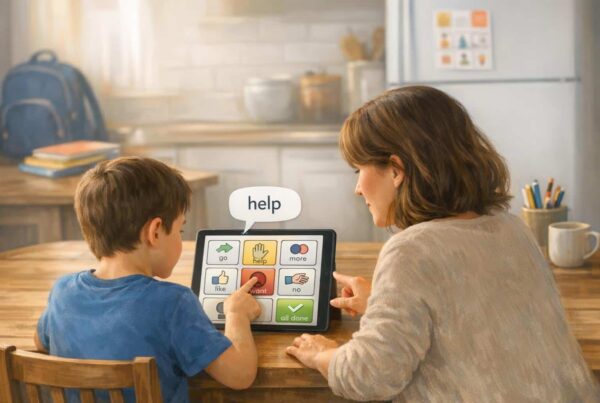
If your child needs communication support to access learning, the school team may provide speech-language services and AAC supports. AAC is not only for children who cannot speak at all. AAC can support functional communication, self-advocacy, and participation across settings.
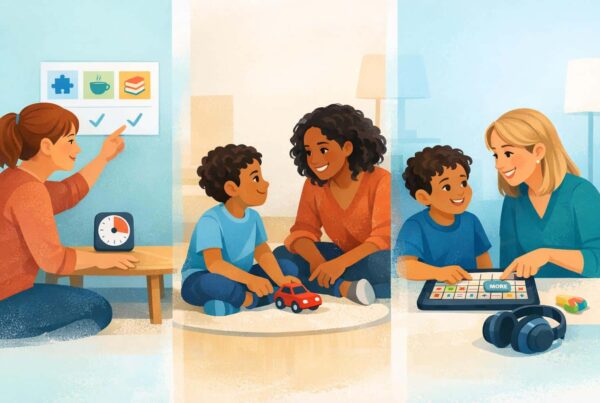
One important detail that many parents miss is that AAC success depends on consistency across partners and environments. When the team shares vocabulary supports with families and models use during daily routines, engagement and progress are more likely.
What to ask the school for, in plain language.
Here is a simple, specific list you can copy into an email.
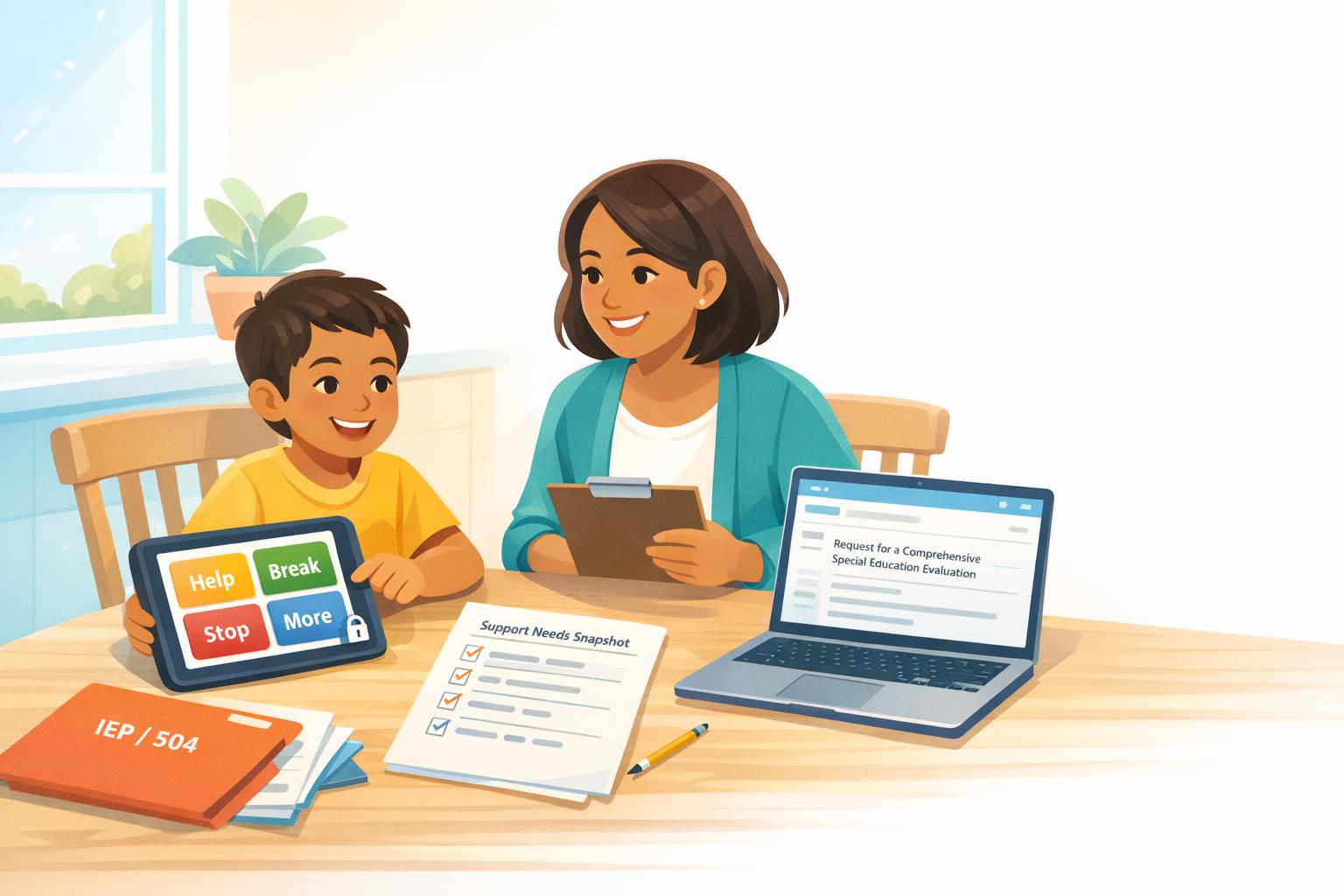
- “I am requesting a comprehensive special education evaluation.”
- “I want speech-language testing that includes functional communication and AAC needs.”
- “I am requesting an assistive technology evaluation if AAC access is a concern.”
- “I want the team to consider sensory and regulation needs in the classroom.”
- “Please provide prior written notice of what the school agrees to evaluate and why.”
Free and low cost healthcare supports that often apply to autistic children.
Healthcare entitlements vary widely. Still, there are a few categories that often include free or nearly free options, especially for families who qualify based on income, disability status, or level of support needs.
1. Public insurance programs and disability pathways.
In many regions, children can qualify for public health insurance. Some areas have disability related eligibility pathways that do not rely only on household income, especially when support needs are significant. This can open doors to therapy coverage, medical visits, and sometimes durable medical equipment.
2. Therapy that is covered, even when it does not feel “free.”
Many families pay copays and assume it is not worth pursuing covered services. But if you have insurance coverage, it can dramatically reduce costs for speech therapy, occupational therapy, feeding therapy, and behavioral supports. The key is documentation. Clear evaluation reports and functional goals usually strengthen the case for coverage.
3. AAC devices, trials, and support.
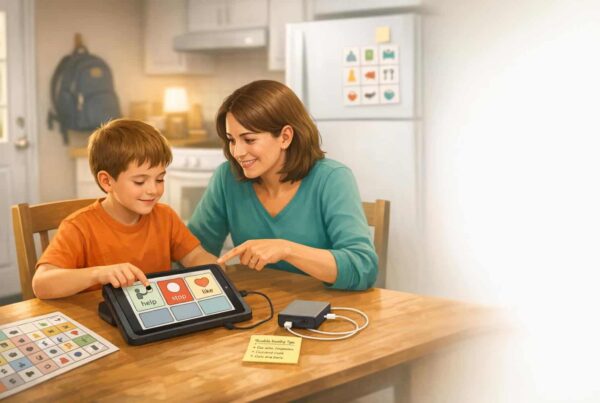
AAC may be funded through school, insurance, grants, or a combination. Even when a high tech device is not immediately funded, many teams can start with low tech supports while exploring options. A strong AAC plan is built around daily use, meaningful routines, and teaching communication functions that reduce frustration. For example, learning to communicate “stop,” “help,” or “break” can be a huge quality of life shift.
Free supports that protect your child’s rights and safety online.
Many autistic children use apps for communication, learning, and regulation. Parents often do not realize that children’s apps have specific privacy obligations, and that you can ask better questions about how data is handled. For example, U.S. COPPA protections cover personal information, and audio files that contain a child’s voice can be considered personal information in that framework.
If you use a communication app or a therapy related app, it is reasonable to ask what data is collected, how it is stored, and whether third party tools are involved. A privacy by design approach is widely recommended for children’s products.
You can learn more about children’s online privacy basics through the FTC’s overview at https://www.ftc.gov/business-guidance/privacy-security/childrens-privacy.
A step by step plan to find what you qualify for, without getting overwhelmed.
When you are exhausted, research can feel like a second job. This is the simplest process I have seen work for families, especially right after diagnosis.
- Start with one written request. Email the school or early intervention program and request an evaluation.
- Collect two documents. Get a medical diagnostic report and a current therapy or school report that describes functional needs.
- Make a one page “support needs” snapshot. Include communication needs, safety risks, and any daily living challenges.
- Apply for benefits even if you are unsure. Many programs deny first, then approve after additional documentation.
- Ask providers what code or justification they use. In insurance systems, “medical necessity” language matters.
- Build a small team. One school contact, one medical contact, and one trusted parent friend is enough to start.
What free support can look like in real life, for SLPs and parents.
For speech-language pathologists, “free entitlements” often show up as school provided AAC access, classroom communication supports, and family training. For parents, it looks like your child having a voice that works at home and at school, without you having to reinvent everything alone.
One reason AAC support can be life changing is that success is not only about big milestones. It is about small, repeatable wins that build confidence. Increased initiation, using AAC with a new partner, communicating discomfort safely, and repairing breakdowns are all meaningful progress points.
If you are a parent reading this, I want you to hear this clearly. Refusals are not a failure. When a child can communicate “no” appropriately, it often reduces meltdowns and helps them feel safer in their own body and environment.
Common “free” resources families miss, and how to ask for them.
Some of the most helpful resources are not formal entitlements. They are practical supports that exist in your community, clinic, or school, but nobody hands you a list.
Fee waivers and scholarships.
YMCA programs, camps, museums, and adaptive sports often have fee waivers. Ask directly if they offer scholarships for disability or financial need. It is common, and you do not have to prove everything in the first conversation. You can simply ask what documentation they need.
Parent training and coaching built into services.
Some early intervention and school programs include parent training as part of service delivery. For AAC, this can be as simple as learning how to model core words during routines, and how to respond in a way that makes communication feel powerful for the child. Consistency across the day matters.
Low tech AAC as a free bridge.
If you are waiting on a device trial or funding, low tech AAC can reduce frustration immediately. A simple communication board, picture cards, or a small flip book can support requesting, refusing, and basic self-advocacy. Many SLPs can help families set this up quickly using vocabulary that matches the child’s daily life.
FAQ: What am I entitled to with an autistic child for free?
What benefits can I get for an autistic child without paying?
You may be able to access publicly funded evaluation and school supports, and you may qualify for public insurance, disability benefits, or waiver programs depending on your location. The best first step is to request a school evaluation in writing and ask your pediatrician for documentation of support needs.
Is speech therapy free for autism?
Speech therapy can be free through the school system if it is needed for educational access and is included in the IEP. It can also be covered by insurance or public programs, which may reduce costs significantly. AAC related support can be part of speech-language services when communication access is a need.
Can my child get an AAC device for free?
Sometimes, yes. AAC devices may be provided through schools, funded through insurance, or supported through grants. Even when a device is not immediately funded, low tech AAC can often be started right away while the team builds documentation and trials.
What if my school says my child does not qualify for services?
You can ask for the decision in writing and request details on what data the school used. You can also ask what additional information would change eligibility. Many families choose to pursue an independent evaluation and request the team review it.
How can I protect my child’s privacy when using autism and AAC apps?
Choose reputable apps, review privacy policies, and ask what data is collected and shared. Children’s voice data can be considered personal information in certain frameworks, so it is reasonable to be cautious with any app that records or stores audio. You can learn more about COPPA at https://www.dhs.gov/know2protect.
Final thoughts.
You are not asking for special treatment when you look for free support. You are trying to give your child access to communication, learning, and everyday life. Start with what is most immediate. Safety, communication, and school access are usually the best first targets. Then build outward into benefits, community programs, and long term planning.